
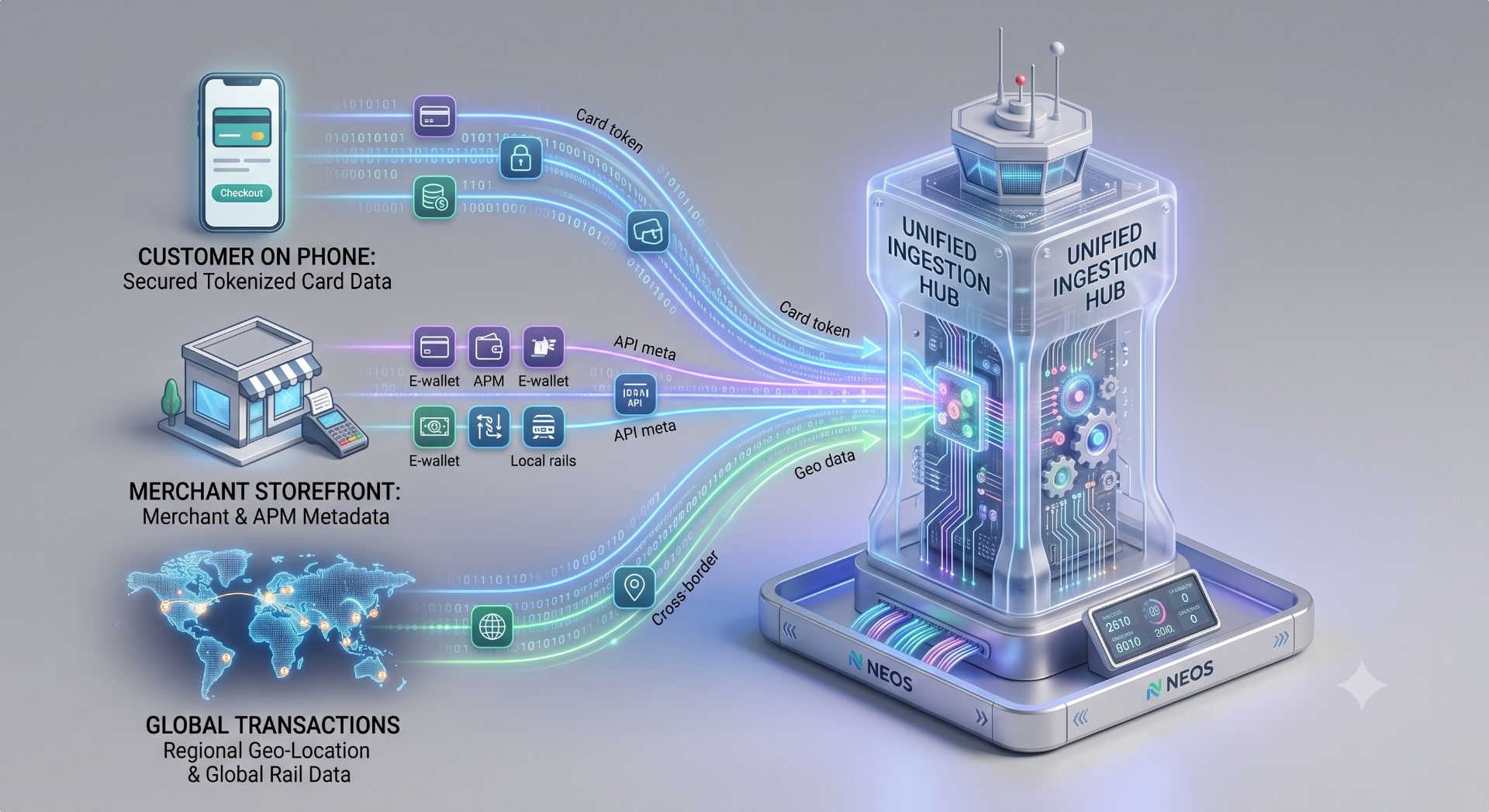
You’ve built a world-class product. You’ve nailed your user acquisition. You are scaling globally. But beneath the polished surface of your slick checkout page, there is a hidden, expensive engine that is either fueling your rocket or silently siphoning away your fuel.
I am talking about Payments Infrastructure.
For too long, this has been treated as a plumbing problem, simple connectivity from point A to point B. But in 2026, raw plumbing is table stakes. Strategy is experience. And the strategy that separates the legacy merchants from the disruptive market leaders is Payment Orchestration.
Forget hardcoded rules and disjointed gateways. Payment Orchestration is about turning raw transaction data into intelligent, millisecond-level business decisions that directly impact your conversion rates, your cost structure, and your ultimate redundancy.
Let’s decode exactly what that means, and how you can move from a legacy mindset to a data-driven command center
Core Architecture: Receives, Decides, Executes
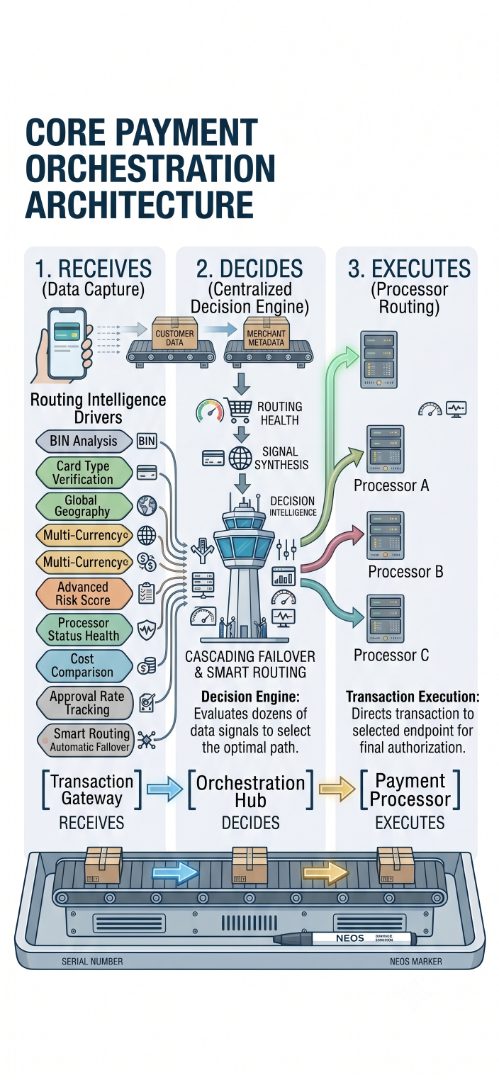
At its foundation, a Payment Orchestration Platform (POP) replaces a static connection with a dynamic decision layer. To understand its power, you must first understand how it breaks the lifecycle of a payment into three distinct phases.
This isn’t just an engineering flowchart; this is your financial strategy in three steps:
Phase 1: Receives (Data Capture)
This is the front door. The orchestration platform’s secure edge captures raw card details, alternative payment method (APM) tokens, and, most importantly, metadata (customer ID, transaction value, cart contents) directly from your checkout application. The "Receives" stage is about secure data aggregation and readiness.
Phase 2: Decides (The Decision Engine)
This is the brain. In milliseconds, the orchestrator’s core engine ingests the dozens of data signals captured in the previous step. It isn’t just looking at the amount; it's analyzing the entire transaction context, the BIN, the geography, the current health of available processors, to determine the optimal path for success. This is where plumbing ends and intelligence begins.
Phase 3: Executes (Processor Routing)
This is the final mile. Once the optimal decision is made, the orchestrator handshakes with the selected endpoint, a bank, a gateway, or a specialized processor, to finalize the charge and manage the settlement rail.
Decision Engine & Intelligent Smart Routing: Processing for Experience
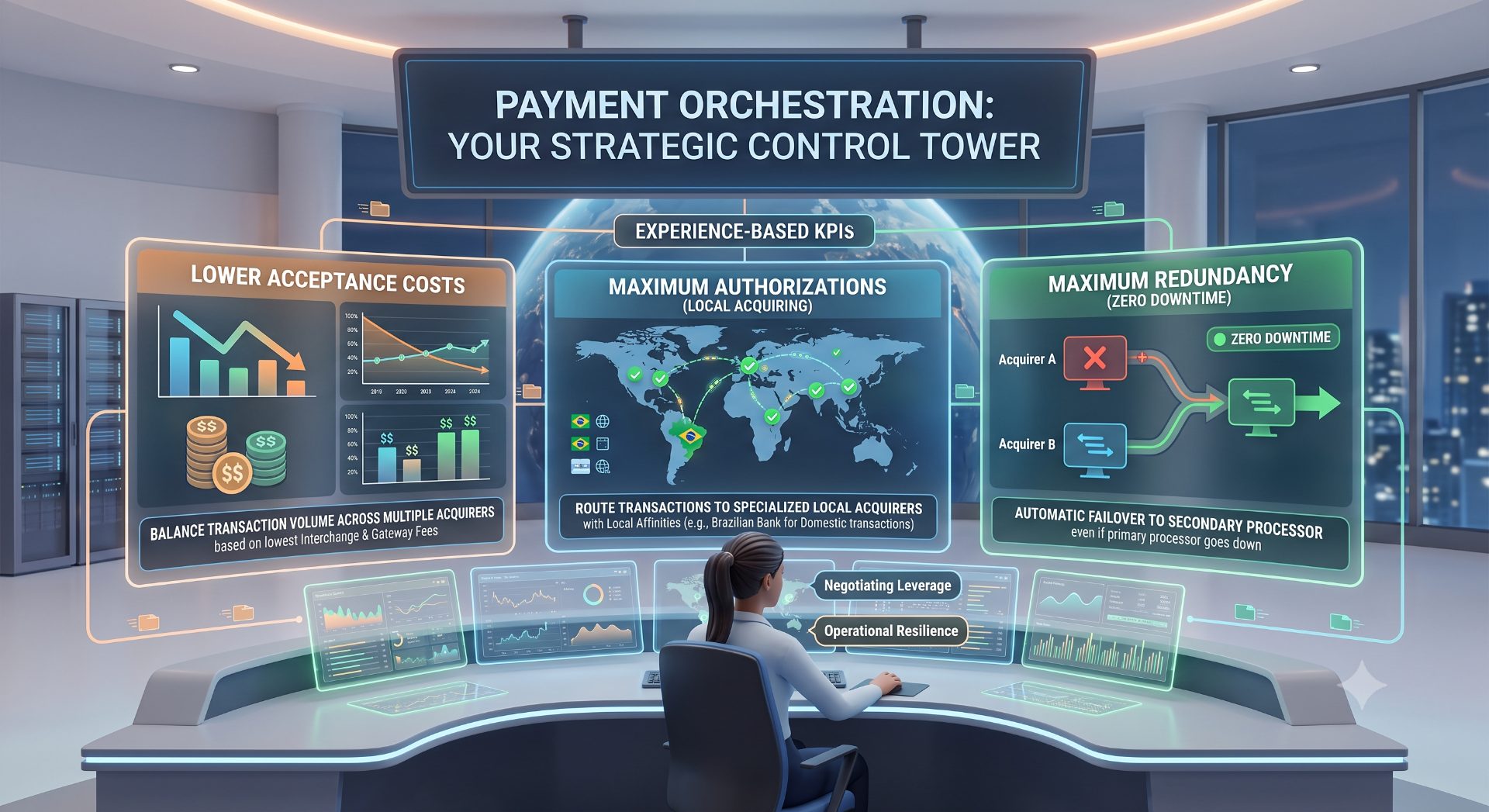
The true differentiator of modern orchestration is not that it can connect to 50 gateways. It’s that it can think in milliseconds.
The central tower of the diagram (Image 2) isn't just a junction, it is a sophisticated data warehouse, processing multiple variables to maximize authorization rates per specific use case. If you are just sending a Visa transaction through a generalized rail, you are leaving revenue on the table. An intelligent orchestrator treats every payment as a unique fingerprint.
Moving From Static Rules to Experience Data
Intelligent Smart Routing uses experience data to make decisions, analyzing key variables instantly:
- Regional Specificity (BIN Analysis): Do not send a specialized US debit card through a B2B rail in Germany and expect 99% approval. Use BIN intelligence to route based on issuing bank affinity.
- Processor Status Health (Latency Metrics): A processor being "up" is not enough. Are their APIs taking 2 seconds longer than average? Are they soft-declining Visa credit cards specifically? A real-time engine monitors performance and can reroute before a total outage occurs.
- Alternative Payment Methods (APMs): Dynamically render specialized payment options (e.g., PIX in Brazil, iDEAL in the Netherlands, local wallets in APAC) based on user geography and transaction context, routed through their lowest-friction rails
Dynamic Failover and Cascading: Milisecond-Level Revenue Recovery
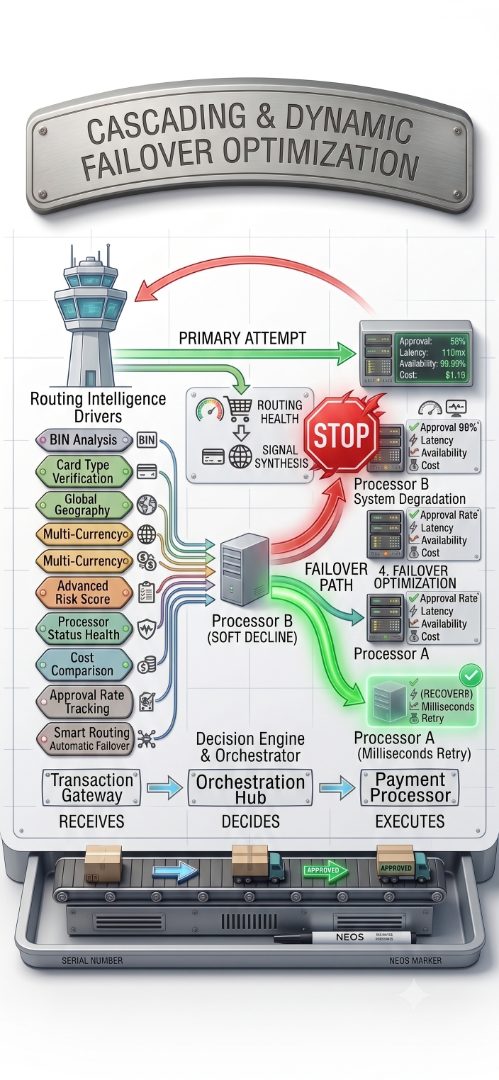
A payment decline is often treated as the end of the road. In traditional setups, it is. If your PSP returns a decline, you have lost that customer.
Payment Orchestration flips this script with Cascading and Dynamic Failover.
This is not a theoretical scenario; this is active revenue rescue. The orchestrator must distinguish between a hard decline (insufficient funds, stolen card, where you should stop) and a soft decline (technical timeout, network error, PSP degradation, where you should reroute).
By intercepting a soft decline instantly, the orchestrator automatically reroutes the authorization request to a secondary processor, rescuing the sale without requiring the customer to lift a finger or even know that a retry occurred.
Strategic Impact: Processor Service Profiles and Financial Optimization
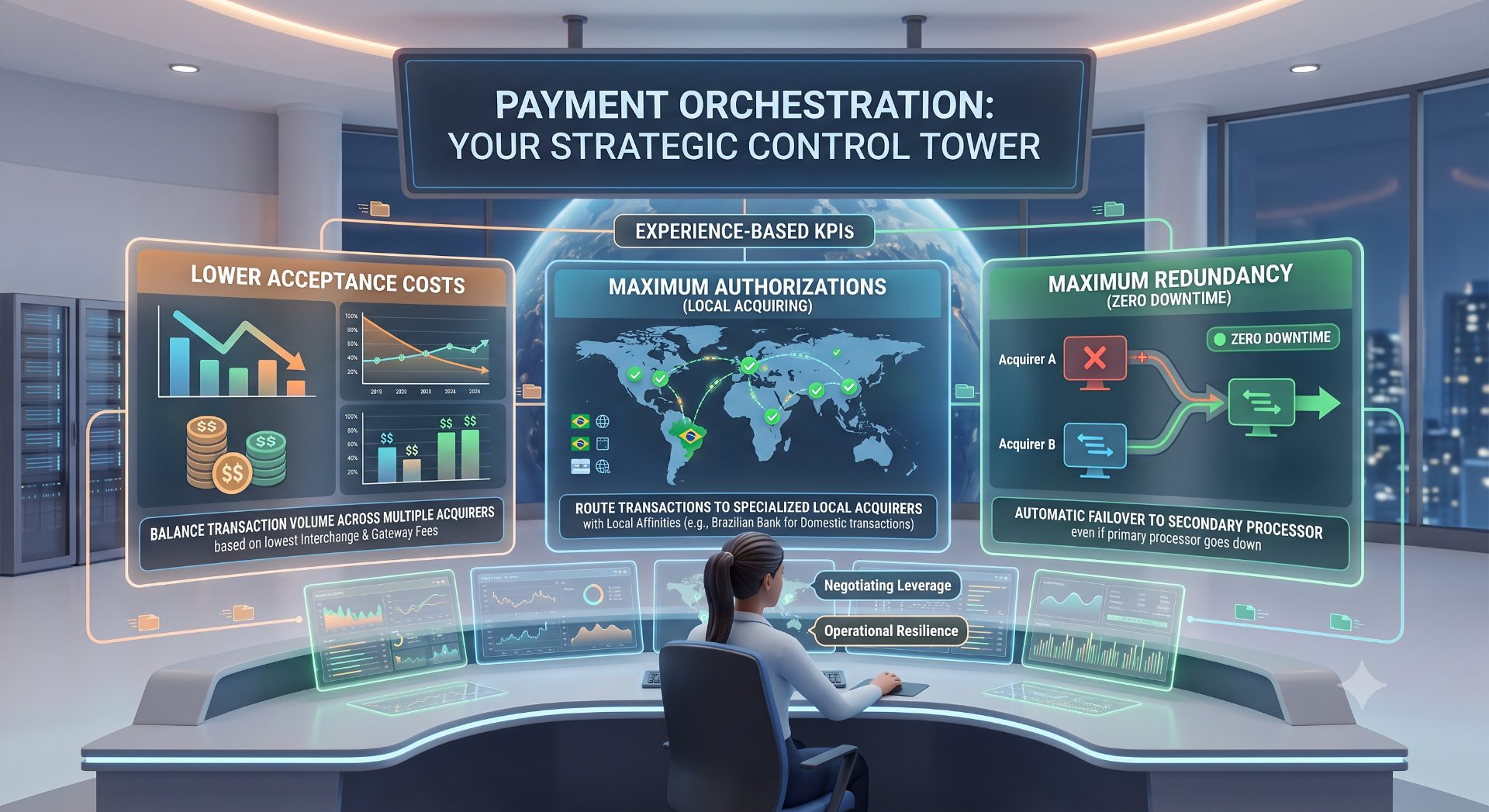
If you are not orchestrating, you are bound by a single provider’s fee schedule and localized acquiring performance. With orchestration, you gain negotiating leverage and operational resilience.
Measuring Success in Experience-Based KPIs
The outcome of moving to an orchestrated control tower is quantifiable across three strategic metrics:
- Lower Acceptance Costs: Strategically balance transaction volume across multiple acquirers based on lowest interchange and gateway fees.
- Maximum Authorizations (Local Acquiring): route transactions to specialized acquirers with local affinities (e.g., routing domestic Brazilian transactions to a Brazilian bank).
- Maximum Redundancy (Zero Downtime): Automatic failover means that even if your primary processor goes down, your business does not.
To execute this financial optimization, your control tower must have visibility into the Experience Profiles of every processor in your stack. It must compare approval performance, latency spikes, and fee structures in real-time.